Drainage
High-Pressure Drain Jetting
High-pressure water for blockages that rods will not shift.
We confirm the price with you before any work starts.
- No call-out fee
- Qualified professionals
- 12-month workmanship guarantee
- Emergency call-outs
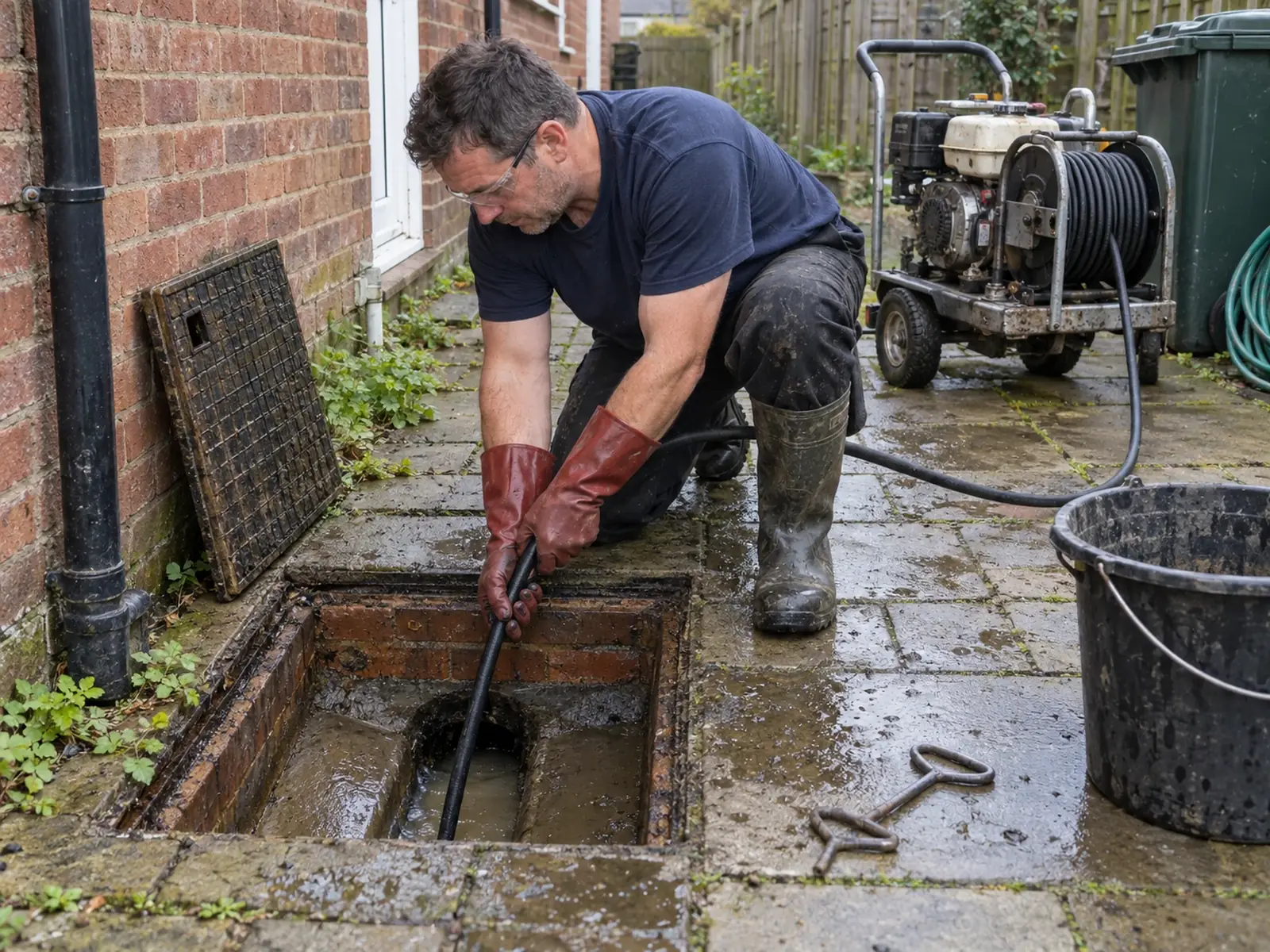
For stubborn or deeper drainage blockages, high-pressure water jetting can be used to clear deposits and restore flow.
A hose is fed down the drain with a jetting head on the end. The jets break the blockage apart and push the pieces away, and because they also work backwards against the pipe wall, the hose scours off grease and scale as it is drawn out. That is the part rodding cannot do — rods push a blockage through, jetting takes the lining of fat and silt with it.
Whether jetting is the right approach depends on what the drain is made of and what condition it is in, which is why an engineer looks before deciding.
The price you see is based on what you tell us. If our engineer finds that more work or materials are needed, they will explain the cost and get your agreement before carrying on — nothing is added without you agreeing to it first.
Do you need this?
You might need this if
- A blockage that rodding has not cleared
- A drain that empties slowly even when it is not blocked
- Repeated blockages in the same length of pipe
- Years of fat and grease from a kitchen waste
- Silt or debris washed into an outside gully
- A commercial or shared drain with heavy use
Qualified engineers across London, seven days a week.
On the day
What the work involves
Roughly what to expect. The exact steps vary with the job.
- Step 1:The engineer looks at the drain and its access points first
- Step 2:The jetting hose is fed in from the nearest chamber or gully
- Step 3:The blockage is broken up and flushed through
- Step 4:The pipe wall is scoured as the hose is drawn back
- Step 5:The run is tested to confirm it is flowing properly
- Step 6:Where the blockage keeps returning, a camera survey is the sensible next step
How it works
How booking works
You see what the job costs before giving us any personal details.
-
Step 1: Tell us what you need
Pick your service and answer a few plain-English questions about the job.
-
Step 2: See your price
We show you the price before you give us any personal details.
-
Step 3: Choose your slot
Pick an arrival window that suits you from our genuine availability.
-
Step 4: Pay your deposit
Secure your appointment with a £10 deposit, taken off your final bill.
Questions
Common questions
How is jetting different from rodding?
Rods push a blockage along until it clears. Jetting cuts it apart and washes it away, and scours the grease and scale off the pipe wall on the way out. That tends to keep a drain clear longer, because it removes what the next blockage would have formed on.
Will jetting damage my drains?
It is a routine method used on domestic drainage every day, and pressure is matched to the pipe. That said, jetting can find a weakness that was already there — a cracked or badly laid section may not survive the process. The engineer assesses the drain first, and if there is reason to think the pipe is in poor condition they will say so before starting.
Will it definitely clear the blockage?
Usually, but we will not promise it. Some blockages are an object lodged in the pipe, roots through a joint, or a section that has collapsed — those need cutting, repairing or relining rather than washing away. If jetting does not clear it, what we find tells us what will.
Do I need a camera survey as well?
Not for a one-off blockage that clears normally. If the same drain has blocked before, a survey is worth doing while the pipe is clean, because that is when the camera can actually see the cause.