Drainage
Blocked toilets, sinks and drains cleared, including manholes and external drains.
- No call-out fee
- Qualified professionals
- 12-month workmanship guarantee
- Emergency call-outs
What we do
Drainage services
Pick the one that matches your job. Each page explains what is involved before you book anything.
Blocked Toilet
Toilets that are blocked, slow draining, backing up or not flushing properly.
Blocked Sinks & Drains
Kitchen, bathroom and utility sinks that are blocked, slow draining or backing up.
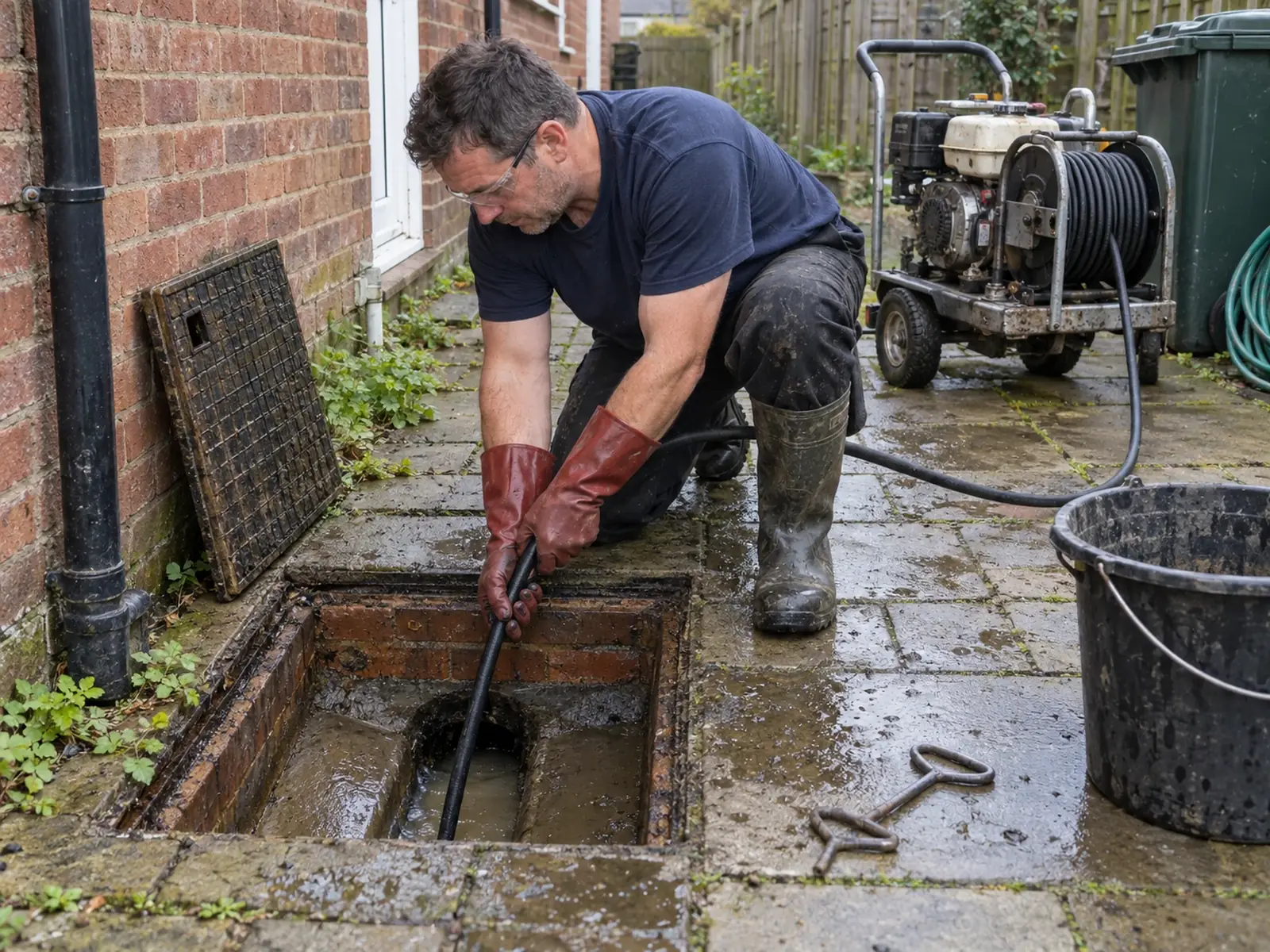
Blocked Manholes & External Drains
Overflowing manholes, several blocked fixtures, or waste backing up outside.
Before you pay anyone
Sometimes you don't need to pay us
If what you tell us suggests the blockage may sit on a shared or public sewer, we will say so — because that could be your water company's responsibility to clear rather than yours.
- A drain that serves only your property, inside your boundary, is normally the homeowner's responsibility.
- Shared drainage, or a section beyond your boundary, may be the water company's.
- If neighbouring properties have the same problem at the same time, that can point to a sewer rather than your drain.
This is guidance based on the information you provide, not a decision about who is legally responsible. Where the signs point outside your boundary it costs nothing to report it to your water company first — and you are still welcome to book us if you would rather have it looked at properly.
Check what's blockedWhy book drainage with us
- Your price before your details
- Answer what is blocked, give a postcode, see the price. No form to fill in first.
- No call-out fee
- What you are quoted is for the work, not for turning up.
- We tell you what we find
- Including when the blockage is not where you thought, or not yours to pay for.
- Guaranteed workmanship
- 12 months on the work we carry out.
How it works
How booking works
No waiting for a call back, and no surprise pricing. You see what the job costs before giving us any personal details.
Get My Price-
Step 1: Tell us what you need
Pick your service and answer a few plain-English questions about the job.
-
Step 2: See your price
We show you the price before you give us any personal details.
-
Step 3: Choose your slot
Pick an arrival window that suits you from our genuine availability.
-
Step 4: Pay your deposit
Secure your appointment with a £10 deposit, taken off your final bill.
Before you call
Is it the toilet, or is it the drain?
A blocked toilet and a blocked drain look identical from the bathroom door. They are different jobs, and one of them may not even be yours to pay for. Two checks tell them apart, and you can do both before you ring anyone.
First — count how many things are affected
Run the basin. Empty the bath. Flush a different toilet. What you are looking for is whether the problem is confined to one fitting or shared between several.
Only one fitting
Everything else drains normally. The blockage is close to the fitting that is playing up — in its trap, or the short run of pipe leaving it. This is the smaller job, and it is inside the property.
Two or more at once
A toilet that bubbles when the bath empties, or waste rising in the shower when you flush. None of those fittings is blocked. The blockage is in the pipework they all drain into, and everything above it is backing up.
Then — lift the cover and read the chamber
Find the cover nearest the house and look inside. This is the check that settles it, because a chamber shows you whether waste is still moving past that point.
The chamber is full
Standing water or sewage, not moving. Waste has reached this point and stopped, so the blockage is after it — further out, towards the boundary. Your indoor pipework is doing its job.
The chamber is empty
Dry, or clear and draining away. Nothing is reaching it, so the blockage is before it — between the house and this chamber. That is your internal pipework.
If there is more than one cover, keep working towards the boundary. The blockage lies between the last chamber you find full and the first one you find empty.
Whose drain is it?
Pipes inside your boundary that serve only your property are yours. The sewer beyond it, and anything shared with neighbours, belongs to your water company — the private sewer transfer moved those across in October 2011. Thames Water, who cover most of London, describe it by symptom: outside your boundary, or more than one property affected, and it is theirs. Only your home affected, with no other flooding nearby, and it is very likely yours. When the signs point outside your boundary, report it to them first.
If waste is coming back up
Stop using water anywhere in the property — taps, toilets, showers, the washing machine and the dishwasher included. Everything you send down adds to what already has nowhere to go. Keep people and pets away from it, put any cover you have lifted back, and call us. Tell us what you saw in the chamber and the engineer arrives knowing which end of the job they are dealing with.
Drainage work, explained
A blockage tells you where it is by how much it affects. One fitting playing up — a toilet that will not clear, a basin that empties slowly — is usually a blockage close to that fitting. Several at once, or a toilet that bubbles when the bath drains, means the problem is further down the system and everything upstream of it is backing up.
We clear blocked toilets, sinks, basins, baths and showers inside the property, and blocked gullies, manholes and underground drains outside it. Where the same blockage keeps returning, the useful question is why it keeps returning, which is what a camera survey is for.
What people call us about
- A toilet that fills up and clears slowly, or not at all
- A kitchen sink standing full of water that will not go down
- A bath or shower still emptying long after you have finished
- Gurgling from one drain when you use a different one
- A drain smell indoors, or around a cover outside
- Water standing in an outside gully or drain cover after rain
- Sewage rising in a manhole, or backing up into the lowest fitting in the house
- A blockage that keeps coming back after being cleared
Looking for something else?
Questions
Common questions
How do I know whether the blockage is inside the house or out in the drain?
Count how many things are affected. One fitting misbehaving on its own — just the basin, just one toilet — points to a blockage close to that fitting. Two or more at once, or a toilet that bubbles when you empty the bath, points to the shared pipework they all drain into.
The check that settles it is the manhole. Lift the cover nearest the house and look. If the chamber is full or the water is standing still, the blockage is somewhere downstream of that chamber. If it is empty and dry, whatever is wrong is between the house and that point, so it is inside your pipework.
What is a manhole, and where would mine be?
A manhole — an inspection chamber, properly — is an access point built into the run of a drain, usually where pipes join or change direction. It lets the drain be inspected and rodded without digging anything up. Most properties have one fairly close to the house and another near the boundary, under a square or round metal or plastic cover in a path, driveway or garden.
Is a blocked drain my responsibility or the water company's?
It depends where the blockage is. You are responsible for the pipes inside your boundary that serve only your property. The sewer beyond your boundary, and pipes shared with neighbouring properties, belong to your water company — that has been the case since the private sewer transfer in October 2011, whatever condition the pipes were in.
Thames Water, who cover most of London, describe the split by symptom: if the problem is outside your boundary, or more than one property is affected, it is one for them. If only your home is affected and there is no other flooding locally, the blockage is very likely on your own drainage. Reporting it to them first costs nothing and is worth doing when the signs point outside your boundary.
How soon can someone come out?
Ring us rather than booking online if it will not wait — the phone gets you straight to someone who can tell you when an engineer can reach you.
How do you actually clear a blockage?
It depends where it is and what it is made of. Close to a fitting, a plunger, a hand auger or taking the trap off is usually enough. Further along, drain rods pushed in from an access point will shift most things.
For anything solid or stubborn there is high-pressure water jetting, which is a hose fed down the drain that cuts the blockage apart and scours the pipe wall as it goes. Roots and hardened scale need electro-mechanical cutting instead — a rotating flexible cable with cutting heads on the end. If the same blockage keeps returning, a camera down the drain shows whether something structural is causing it.
Should I pour drain cleaner down it first?
We would not. Caustic products can struggle with the blockage and still sit in the pipe, and standing chemical is a hazard for whoever opens the drain next — including our engineer. If you have already used some, just tell us when you call so they arrive knowing.
Why does the same drain keep blocking?
A blockage that returns is usually a symptom rather than the problem. Fat and grease build up on the pipe wall until the bore is too narrow for normal use. Roots find a cracked joint and keep growing back. A section of pipe has sagged, cracked or partly collapsed, so waste no longer runs away cleanly. Clearing it fixes today; a camera survey shows which of those is behind it.
What causes blockages in the first place?
Indoors, mostly fat, oil and grease poured down the sink, which cools and sets on the pipe wall and then catches everything else. Wet wipes are the other big one — including the ones sold as flushable, which do not break down like paper does. Outdoors, it tends to be tree roots, silt and leaves washed into gullies, and the odd broken pipe.
Sewage is coming up into the shower. What do I do right now?
Stop running water anywhere in the house — no taps, no toilets, no washing machine — because everything you send down has nowhere to go but back up. Keep people and pets away from it. Then call us. If you can safely lift the manhole cover and tell us what is in there, that helps the engineer arrive prepared.
Do you unblock outside drains and gullies as well?
Yes. Gullies, manholes, inspection chambers and the underground runs between them, as long as they are within your boundary and serve your property. Where a blockage turns out to be in the shared sewer beyond that, we will tell you, because that one belongs to your water company rather than to you.
Not sure which one you need?
Give us a call and we will point you to the right service.